I have heard several parents say they don't sing well in front of their kids this past week. You might be a terrible singer, but don't tell your kids that. Sing anyway. Show your kids that you can enjoy making music. If you enjoy making music then your kids will learn to enjoy it too.
Susan Darrow, CEO of Music Together, has a great story to share about her dad not singing on key, but still helping her become a musical person. Start listing at 1:40 to hear her story.
Even if you do not think you have much musical ability you can still raise musical children. We are all born with musical ability, we just need to be shown what to do with it. Turn on your favorite music, sing along, dance, get out your pots and pans and play along, just enjoy making music.
This is a group for the families that I teach, and anyone else interested in early childhood music and home school activities.
Sunday, August 30, 2015
Monday, August 24, 2015
Classical Conversations Cycle 1 Week 1
We are excited to start a new year of CC! This is the first time we are repeating a cycle. I am excited to see the new ways we learn the information now that the kids are older. I have already seen so many subjects be easy to learn because the kids memorized the material through fun songs when they were littler. Multiplication is a breeze with my oldest since she had learned skip counting through singing.
CC doesn't put counting ones to a song. But Sesame Street does and it's fun!
I LOVE Pentatonix version of the song. If you just want to hear them sing it skip to 2:05. If you want to see Cookie Monster watch the whole thing. We will revisit Pentatonix version of the song again when we study Rondo form in the Spring.
I don't have cool videos for everything. Skip counting the 2's is just sung to Jesus Loves Me. It's good to keep some things simple.
The older kids will have to say the whole math fact. I think we are going to shoot them with Nerf guns while we say them! The facts are written on a shower board. Suction Nerf bullets stick to it nicely.
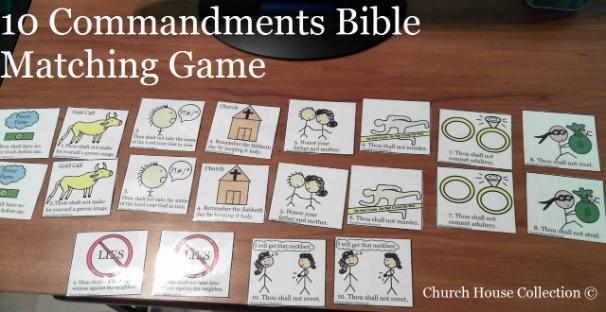
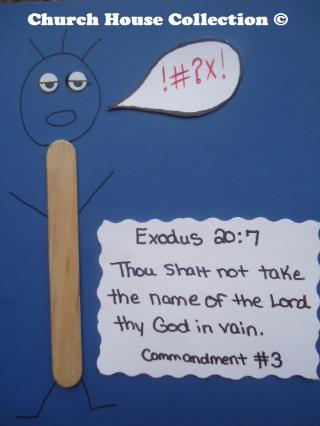
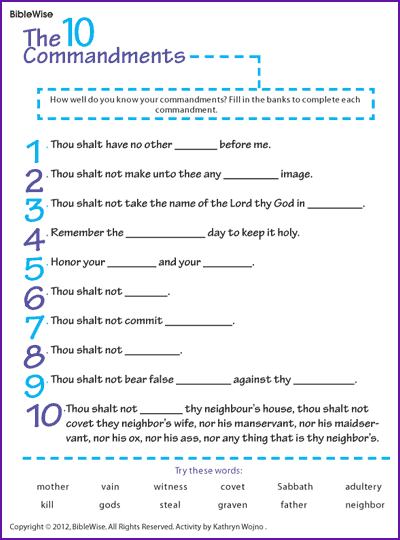
For History this week and next there are some fun 10 commandment matching card games, crafts, and worksheets you can do at home.


We have always sung the Classifications of Living Things to the ringtone that was on my cell phone the last time we went through cycle 1. Sorry, that's not a lot of help. Just make up a little song. In class we are going to stack boxes.
CC doesn't put counting ones to a song. But Sesame Street does and it's fun!
I LOVE Pentatonix version of the song. If you just want to hear them sing it skip to 2:05. If you want to see Cookie Monster watch the whole thing. We will revisit Pentatonix version of the song again when we study Rondo form in the Spring.
I don't have cool videos for everything. Skip counting the 2's is just sung to Jesus Loves Me. It's good to keep some things simple.
The older kids will have to say the whole math fact. I think we are going to shoot them with Nerf guns while we say them! The facts are written on a shower board. Suction Nerf bullets stick to it nicely.
For History this week and next there are some fun 10 commandment matching card games, crafts, and worksheets you can do at home.

We have always sung the Classifications of Living Things to the ringtone that was on my cell phone the last time we went through cycle 1. Sorry, that's not a lot of help. Just make up a little song. In class we are going to stack boxes.
Going to the zoo is a great way to look at the genus and species of animals. They are listed in Latin so you get two subjects at once while on a field trip! Homeschooling is great!
English
In English we are going to chant the definition of a Preposition. We are going to look at prepositions for 12 weeks so just get the definition down for now.
Latin
We are memorizing noun cases. This is still new to me too. Just memorize it for now. Having it memorized will make their lives easier in highschool. If you want more of an explanation of Latin Cases here's a good one.
Geography
The students are showing and telling where places in the Fertile Crescent are. Get out your Bibles and find where these places are talked about. The big job for now is that each student can show you where each location is if you ask for it by name and tell you what each location is if you point to it on the map.
We will also do blobbing for geography. If you have no idea what this is watch this short video.
Fine Art
We are talking about OiLs this week. Those are basic shapes. Circles, dots, lines, angles, and squiggles. Since science focuses on Biology this year I think we will use our art lessons to draw nature. This week students will each get a blank leaf and use OiLs to fill it in.
Here is the lesson if you would like it http://artprojectsforkids.org/patterned-leaf/
I am really excited about the final project, but you'll have to wait for that to be revealed.
Science Experiment
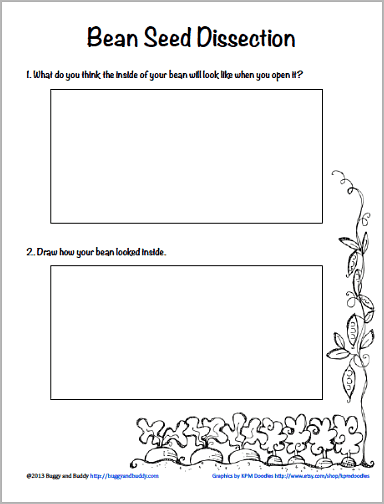
We are dissecting a bean. We will focus on what a hypothesis is and use this sheet to help.
Saturday, August 15, 2015
A-rhythm-etic
I came across this Ted Talk today and enjoyed it, but it also kind of made my head hurt! Clayton Crameron talks about how swing is duple but subdivided triple and gives examples. We broke that down in the Music Together Cert II workshop I just complete. It has made me really think about how to approach rhythm and rhythm patterns for swing songs in Music Together classes. While its a lot for me to consider, if I do it right it will just come across as play for the kids in class.
Sweet Potato is the only swing meter song coming up in the Fall Music Together collection. If you know the song see if you can figure out how it can feel both duple and triple!
Thursday, August 13, 2015
Classical Conversations Meets Music Together
I think my presentation went well (you can refer to the previous post if you want a few more details). At least I had fun giving the presentation. I think that's my main goal in life, to have fun doing whatever it is I've been given to do.
The purpose of the presentation was to share Music Together's philosophy with a group of my choice. I choose to share the philosophy with Classical Conversations Foundations tutors.
Classical Conversations is a homeschool group, click the page at the top for more info on that.
Foundations is elementary school
Tutors are the parents who teach a class once a week
I choose that specific group because I actually work with CC Foundations tutors and parents to equip them to teach in the classroom and at home. And I really believe Music Together's philosophy applies to them and can help them more effectively teach their kids.
Music Together is an early childhood music and movement program for parents/caregivers/teachers and their
children/students. Click the page at the top for more information.
To equip these parents we first looked at the classical model of learning in the presentation. The classical model of learning has three stages, and I like to use the tree analogy to look help understand them.
Next we self assessed where we felt we fit musically in the classical model.
Are you still learning the basics of music? Do you have the basics and are understanding how they work? Or can you apply your knowledge of music to create and enhance other learning?
Now we get to how Music Together's philosophy fits in.
Music Together's philosophy is that
* ALL children are born with the potential (aptitude) to make music!
* If young children have playful/informal musical experiences with the adults they trust (parents, close family members, nanny's, teachers) they will acquire a disposition to be music makers, and these experiences will feed their inborn musical potential.
* Modeling being musical (singing, dancing, playing instruments) will help children achieve Basic Music Competence which is the ability to sing full songs in tune and move to the beat of the music they are experiencing.
While looking at Music Together's philosophy we talked about ways we are already enhancing our children's musical aptitude with activities we do in Classical Conversations.
*Tutors and parents model singing and moving to music every week in class.
*Tutors equip parents and continue modeling musical behavior at home.
*We feed off the kids energy by making the activities we do in class fit the students energy. We can adapt an activity to be small movement, large movement, singing, maybe even instrument playing. However we feel the kids will learn it best.
We also talked about ways we can better enhance our children's understanding of music by using the Music Together model in CC.
*Change what you are doing as a parent/tutor to accept and include the children's current behavior. If a child is experiencing a song in his feet then dance. If a child is experiencing a song by clapping then clap. Adapt what you are doing to how the children are learning best in the moment.
*Help students fully understand the musical grammar from the fine arts section by experiencing what note values feel in a song, what a crescendo sounds like, what dynamics sound like. Don't just give them the word and the visual, let them feel it, hear it, and experience it.
*Sing without recordings! You don't have to be a wonderful musician. Even if you sing off key you when you sing it yourself, or move to the music, you are helping the children acquire their own musical dispositions! CC doesn't want you to rely on the recordings either.
My conclusion was very real for me. Even though I was a formally trained musician, I did not reach my full musical potential until I could also feel the music, not just understand it. We can use Music Together's philosophy of experiencing music with trusted adults, through musical play to help our children achieve their fullest musical potential.
Sunday, August 9, 2015
Music Together Meets Classical Conversations
Today's did you know.
Today I get to give a presentation on how the Music Together model and philosophy can help equip Classical Conversations parents and tutors to teach their Foundations level students. I have 10 minutes to present the material to the founders of Music Together. As I was talking to my kids last night it dawned on me that they are probably way more equipped to give a ten minute presentation than I am, and they are still little. I give a huge thanks to CC for putting a strong emphasis on public speaking. I look forward to the ways this will be useful for my children as they grow. I'll elaborate more on my personal presentation in the next post. Lets see how this thing goes today!
Saturday, August 8, 2015
Dad's Have an Amazing Musical Gift to Give
When children hear both male and female voices with regularity they develop a bilingual singing voice in their head (can process both voices). Children who do not have regular exposure to an adult male voice will grumble instead of sing when trying to sing along with a man, or jump an octave above a mans falsetto voice when trying to sing along.
Dads, you have have a wonderful musical gift to give your kids. You do not have to sing well. Just sing. Sing in the register that feels most comfortable for you. Sing while doing something you enjoy with your child. You will help develop your child's musical ear and musical disposition!
Friday, August 7, 2015
Babies Have Rhythm!
Today's did you know
Did you know that by 7-9 months old infants can detect differences between duple and triple rhythms? They develop a sense of rhythm from adults speaking to them, and moving with them when they are experiencing music. This is "accelerated by experience!" The more you dance, move, sing, play instruments, and speak to your baby the quicker they develop their sense of rhythm.
From Infants Perception of Rhythmic Patterns
by TONYA R. BERGESON AND SANDRA E. TREHUB
https://www.utm.utoronto.ca/infant-child-centre/sites/files/infant-child-centre/public/shared/sandra-trehub/001.pdf
"Infants’ sense of rhythm may be linked to their body movements. Indeed, stereotypical rhythms of head, arm, chest, and leg movements have been observed in infancy (Pouthas, 1996; Thelen, 1981), and early bipedal kicking and sucking have binary elements (e.g., suction and relaxation). Moreover, infants gradually integrate endogenous and exogenous rhythms (Pouthas, 1996). When presented with a “moving room,” for example, infants adjust their rate of swaying to match the frequency of room movements (Bertenthal, Rose, & Bai, 1997). It is notable that caregivers typically move while singing to their infants, which is consistent with the notion of intrinsic connections between rhythm and movement (Cross, 2001; Merker, 2000). Much of the motion that caregivers provide for infants can be considered binary, as in rocking (e.g., back and forth) or bouncing (e.g., up and down). Recent evidence indicates that 7-month-old infants’ interpretation of an ambiguous drum rhythm is affected by the pattern of bouncing (on every second or third beat) that they experienced while listening (Phillips-Silver & Trainor, 2005). Such connections between rhythmic sound and motion go well beyond caregiver-infant interactions, with music being inseparable from movement in many cultures (Fraisse, 1982; Merker, 2000). Infants are also sensitive to the rhythmic properties of speech. For example, French newborns differentiate English utterances, which are stress-timed, from Japanese utterances, which are timed at the subsyllabic level, or mora (Nazzi, Bertoncini, & Mehler, 1998)."
"the formation of melodic and temporal expectations may follow a similar developmental timetable, which is accelerated by experience, enculturation, and formal music training."
Did you know that by 7-9 months old infants can detect differences between duple and triple rhythms? They develop a sense of rhythm from adults speaking to them, and moving with them when they are experiencing music. This is "accelerated by experience!" The more you dance, move, sing, play instruments, and speak to your baby the quicker they develop their sense of rhythm.
From Infants Perception of Rhythmic Patterns
by TONYA R. BERGESON AND SANDRA E. TREHUB
https://www.utm.utoronto.ca/infant-child-centre/sites/files/infant-child-centre/public/shared/sandra-trehub/001.pdf
"Infants’ sense of rhythm may be linked to their body movements. Indeed, stereotypical rhythms of head, arm, chest, and leg movements have been observed in infancy (Pouthas, 1996; Thelen, 1981), and early bipedal kicking and sucking have binary elements (e.g., suction and relaxation). Moreover, infants gradually integrate endogenous and exogenous rhythms (Pouthas, 1996). When presented with a “moving room,” for example, infants adjust their rate of swaying to match the frequency of room movements (Bertenthal, Rose, & Bai, 1997). It is notable that caregivers typically move while singing to their infants, which is consistent with the notion of intrinsic connections between rhythm and movement (Cross, 2001; Merker, 2000). Much of the motion that caregivers provide for infants can be considered binary, as in rocking (e.g., back and forth) or bouncing (e.g., up and down). Recent evidence indicates that 7-month-old infants’ interpretation of an ambiguous drum rhythm is affected by the pattern of bouncing (on every second or third beat) that they experienced while listening (Phillips-Silver & Trainor, 2005). Such connections between rhythmic sound and motion go well beyond caregiver-infant interactions, with music being inseparable from movement in many cultures (Fraisse, 1982; Merker, 2000). Infants are also sensitive to the rhythmic properties of speech. For example, French newborns differentiate English utterances, which are stress-timed, from Japanese utterances, which are timed at the subsyllabic level, or mora (Nazzi, Bertoncini, & Mehler, 1998)."
"the formation of melodic and temporal expectations may follow a similar developmental timetable, which is accelerated by experience, enculturation, and formal music training."
Subscribe to:
Posts (Atom)