Tuesday, January 20, 2015

Homeschooling at Disney - Planning Part 1 - Disney Youth Education Program

Last February we went to Disney and the kids did a class while we were there.  We had a great time and decided to do it again this February.  We get a lot of questions about how we planned our trip.  Here is the first of a series of posts about how we plan for school-cation at Disney.

Home School Families Can Go To Disney When It's NOT Crowded!

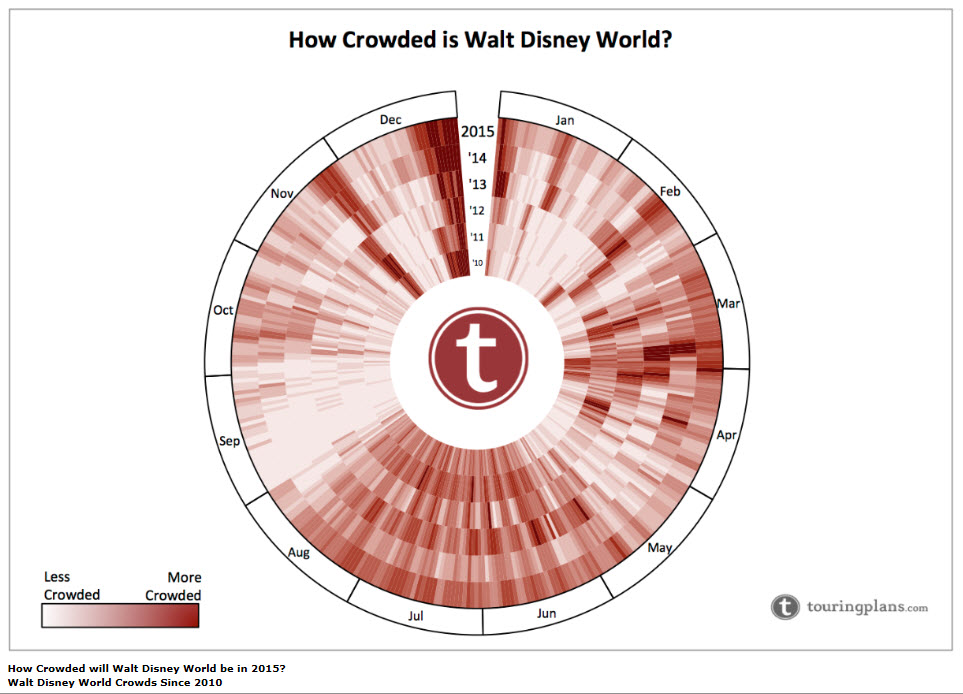
First we decided to go during a time of the year that isn't busy.  Flexibility is our favorite part of homeschooling!  September and early February were the logical choices.  (This also means lower rates on accommodations)!

Disney Youth Education Program


Next we checked out what classes were available for the kids to take.  Disney is strict on having the kids in the class is that for their age.  Our travel dates were set around when the class we wanted was offered.

Here are the links to find the classes:
Disney Youth Education Series (YES)
Choose the park you want (Florida or California)
Make sure you have chosen the individual enrollment option.
This page will show you a list of the classes and a description of each

If you are taking a class you book your whole trip through the YES program site.  You can click here to go straight to the purchase tickets page.  This page doesn't have the descriptions for each class.  It is cheaper for the whole family to get tickets, even those not taking class, to buy through this option than a travel agent.  To see how much it would cost your family choose a class and go through the site.

We began planning in the Fall for our trip.  We booked the class as soon as it became available so we could go ahead and plan the rest of the trip.

Synergy in Science; Last Years Disney Class

Last year the girls took the Synergy in Science class at Epcot.  It was awesome.  The class started before the park opened, so we got in early.  In the class we learned about how it takes many parts working together to make a ride work.  We learned about how Spaceship Earth was made on the outside, and how the adio-anamatronics were made on the inside.  We got to bypass the line and go on the ride as a part of the class.  In our Classical Conversations curriculum we go through a timeline from the beginning of time to present day.  Spaceship Earth is the timeline in a ride!  Classical Conversations is also big on History and Geography so Epcot was an amazing school day.


This year we are taking the How Things Move class in the Magic Kingdom.  One parent is allowed to take the class with the kids.  My husband is taking it with our daughters this year while our son and I enjoy the park together (he is too little for class).  We will update on how awesome this class is after the trip.


Now that you have the links to find the YES program you can figure out the first piece to budgeting a school-cation to Disney.  The next part is accommodations and food.  I will post the choices we made for those in my next post.


Thursday, January 15, 2015

I Recommend

I have always loved Jumpstart Music.  I used the game some when I taught public school a little bit and my own kids have enjoyed it a lot.  It is a preschool/elementary school game computer game that works on musical concepts.  You can adjust the level.  You go through music land and complete rhythm, melody, and instrument identification games to collect points.  I highly recommend it for anyone learning basic musical grammar!

       Play back the correct rhythmFind the bad notesPlay back the correct melody

Wednesday, January 14, 2015

All Play - Improvisation

Deedle, deedle, dumpling,
My son John
Went to bed
With his blue jeans on--
One shoe off
And one shoe on--
Deedle, deedle, dumpling,
My son John.

Change one line - went to bed with his/her __________.  
Post your improvised line in the comments!

Here's mine
Deedle, deedle, dumpling,
My son John
Went to bed
With his light saber on--
One shoe off
And one shoe on--
Deedle, deedle, dumpling,
My son John.

Tuesday, January 13, 2015

What's Heard Can't Be Unheard

I had another fun morning teaching music classes this week.  I told one class I wish I could bottle up the amazing musical developments I get to see the kids make in class and share it with the whole world.

We used this version of Lukey's Boat for a play along.

In a Music Together class the lullaby follows the instrument play along.  This particular play along song is fun and upbeat and it can take your body a little bit to make a big switch from Lukey's Boat to Brahms Lullaby.  I enjoyed watching one little girl continue to internalize the beat from Lukey's Boat well into the lullaby, then change gears and sing Brahms Lullaby while still enjoying to spin in the middle of the group.

Another child in one of my classes likes the Music Together recording of Brahms Lullaby.  It has a bell sound at the beginning.  If you know this lullaby, simply reading the name of it may make your brain think of the tune.  But as soon as we begin to sing the song the little by mentioned knows he would like to hear the version on the recording instead.  If he had never heard the recording he wouldn't know any different.  The point being that once we are exposed to something we can never be unexposed to it.  We might forget, but chances are when we hear it again we will quickly remember.  I can enjoy Brahms Lullaby in different ways, but I can't disassociate the music with the title now that I've heard it and know what it is.

If the title doesn't prompt your memory you can listen here.
 As a mom, and a teacher, I think this power is amazing and scary at the same time.  It makes me realize that I really have to watch what I expose my children to.  Once they hear it it can't be unheard.  They can make decisions about how to approach it, but it can't be unheard.  I want to fill their heads with good!

The Classical Conversations curriculum we use for homeschooling puts many of the facts the children need to learn to music.  I am continually amazed at how they can recall a whole history facts with names and dates by me singing a few simple notes to prompt them.

 This is not one of my kids, but she is a perfect example of how singing helps memorization and what kids are capable of.  Start singing all sorts of wonderful things with your kids while they are little.  Chances are they will soak it all up and amaze you!
 

If you want to see how more about the power of music and memory go to YouTube and search "music therapy nursing home" and see how elderly people remember and react to familiar music.

Monday, January 12, 2015

Classical Conversations Cycle 3 Week 14

In the Foundations program in Classical Conversations the students get small piece of information to memorize for each subject each week.  They are really only required to memorize the work at a young age.  As they get older they will need to begin to understand the material and use it.  However, we like to add a worksheet, game, or video as necessary.  Sometimes the extra information is more for me than for the kids!

English Grammar

Memory work: Conjugate to break - to break, break, breaks, broke breaking, broken

We haven't tried a worksheet for English grammar yet this year, but I found some good ones.

Free worksheet - conjugating to break. http://www.k12reader.com/worksheet/verb-conjugations-to-break/


Science

Memory work - What is an element?  An element is a basic chemical substance defined by its atomic number (number of protons) and atomic mass.

Some fun videos to go along with this week and upcoming science memory work.


Geography

Memory Work - Northwest Mountains, Cascade Mountains, Mt. Rainier, Mt. St. Helens, Mt. McKinley

Mt. Rainier coloring page.
http://www.usa-printables.com/Places/Parks-Monuments/01-parks-013.htm


History

Memory work - Tell me about tycoons.  Curing the late 1800's tycoons like Vanderbilt, Rockefeller, Carnegie, and Swift fueled the nation's Industrial Age by developing American resources.

We've visited the Biltmore house, but now I understand who owned it better!

http://en.wikipedia.org/wiki/John_D._Rockefeller


Latin

Memory Work - John 1:2 hoc erat in principip apud Deum.  This was with God in the beginning.

Math

Memory Work - Linear Equivalents 2.54 cm = 1 inch, 12 inches = 1 foot, 5280feet = 1 mile

There is a fun song we will sing this to in class!  My three year old has had his tape measure out all week.  You can buy an inexpensive little tape measure for your kids at Lowes and measure everything this week!

Science Experiment


Art Project

and

Presentations

Rockwell - See previous post for a description on this weeks art project and presentation promp


Sunday, January 11, 2015

Wouldn't the World Be A Better Place If...

when one person started clapping others joined in and created something beautiful.

I love that my job is to cultivate this kind of creativity!

What We've Been Up To At Journey Montessori

I love teaching for Journey Montessori and it's because of the atmosphere that Director Laura Self has built for the school.  The kids who attend school there are truly fun to teach.  If you have met me before you know I never really grew up and I like to teach through playing.  The rule when the kids get an instrument in their hands is to try it out first.  Who wants to get an instrument and hold it still?  We play, make some crazy noise, and then focus that into a purposeful beat and change it into making some music!

During the first semester we work on keeping a steady beat (but I never really tell the kids that, to them I think we are just playing with music).  We do not put rhythm patterns in our hands or feet, only steady beats on eighth notes, quarter notes, half notes, whole notes.  This is the same way we learn in Music Together.  We will never put the rhythm of a song in our bodies in Music Together class.  Keeping the beat in your bodies and the rhythm in your voice is essential in basic rhythmic development.  
By the second semester we begin to move into putting rhythms in our hands and feet as well as our voices.  Some children will still need to work on keeping a steady beat in their bodies too.  This is an area you can help them with at home.  Play your favorite music and find as many ways you can think of to keep a beat to it (clap, pat, stomp, play on pots and pans).  In class we are beginning by simply clapping the syllables of our names in time in a song.  Not all of us have the same number of syllables in our names, but in the song we are using we need to fit each name into the same amount of space.  Again, an easy activity to play with at home as well.  

First semester we worked on identifying different voices; singing, speaking, whispering, shouting, and how to get a good singing voice out.  Because it was the Star Spangled Banners 200th birthday we learned to sing it and what the words mean.  This is not a typical song to expect small children to sing.  The vocal range needed is not what little voices are expected to sing, but the kids were so excited to learn it and sing it!   We used this book by Scholastic to study the song.  You can find it on Amazon.

We also accomplished singing the African Noelle in two parts at the same time in December.  You can find a lot of versions of that song on Amazon too.  I was so proud of the kids for being able to hold their own simple part!

This semester we will build on those amazing tonal accomplishments as well as take a look at instruments and what families they belong to.  Up until now we have only looked at non-pitched percussion instruments (sticks, shakers, wood block, etc.).  This semester we will explore the ones that make different pitches, like our voices do.  We will use the book Zin Zin A Violin and The Carnival of the Animals for this quest.