I get an update on my blog about once every nine weeks now.
We keep a busy schedule in our house. We homeschool our children and that has taken priority over many other activities during the day, updating my blog is one such thing.
I am thrilled to have so many wonderful families completing a full year of Music Together with their children. This session will be a lot of fun. Now that the routine and expectations of the class are familiar to you and your children we can do more improvising, ostinato parts, and rounds!
We started simple this week by improvising with what we saw in the picture in the book, and ways to move. In the weeks to come we will pass around rhythm patterns and add more parts to our songs.
I encourage you to try singing harmonies and rounds with your CD. If you have a harmony part you like sing it in class! It's great for the children's ears to hear multiple parts.
I will do my best to get any play along and dance songs we use from outside the collection posted here. Have fun waltzing and naming instruments with your child while you watch and listen to the music.
Thursday, March 27, 2014


Monday, January 20, 2014
Musical Contrasts
Welcome to the Winter session of classes. Hopefully you have had a chance to begin enjoying the songs for this collection by now. There are some fabulous mixed meter songs (the ones you can't march or waltz to). I have become such a better musician as an adult by playing with mixed meter with little kids! I think everyone should learn mixed meter through play!
Our dance this week is the Russian Sailors Dance by Reinhold Gliere.
It is a wonderful piece of music to move to. The melody takes on many different personalities and give us a chance to move in many different ways. See how creative you can be coming up with ways to dance along to the song at home this week.
We have used the Love Song of Kangding as both a large movement song dancing with scarves and a lullaby. The version in our collection of songs is a song with out words. Here is a live performance of the song, sung in Chinese, with subtitles. Listen to the difference in the timbre of the performers voices.
Our dance this week is the Russian Sailors Dance by Reinhold Gliere.
It is a wonderful piece of music to move to. The melody takes on many different personalities and give us a chance to move in many different ways. See how creative you can be coming up with ways to dance along to the song at home this week.
We have used the Love Song of Kangding as both a large movement song dancing with scarves and a lullaby. The version in our collection of songs is a song with out words. Here is a live performance of the song, sung in Chinese, with subtitles. Listen to the difference in the timbre of the performers voices.
Thursday, December 12, 2013
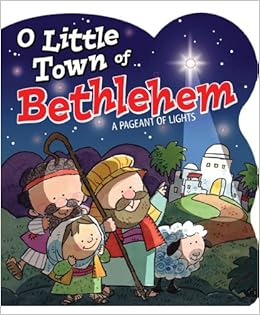
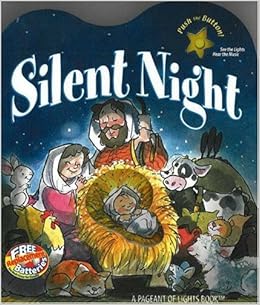
Christmas Books I Love
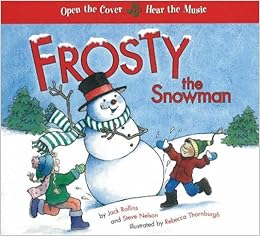
I have a bunch of Christmas sing along books that I love to use in class and with my children at home. Here are a few of my favorites.
 http://www.amazon.com/Santa-Claus-Comin-Town-Coots/dp/0688149383/ref=tmm_hrd_swatch_0?_encoding=UTF8&sr=8-12&qid=1386884468


http://www.amazon.com/Little-Town-Bethlehem-Pageant-Lights/dp/0824918134/ref=sr_1_1?s=books&ie=UTF8&qid=1386884669&sr=1-1&keywords=oh+little+town+of+bethlehem
 http://www.amazon.com/Frosty-Snowman-Musical-Steve-Nelson/dp/0824966716/ref=sr_1_6?s=books&ie=UTF8&qid=1386884793&sr=1-6&keywords=frosty+the+snowman

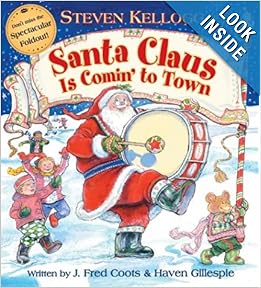
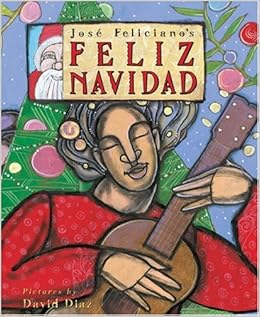
My kids love these light up board books!

Tuesday, November 19, 2013
Holiday 2013
We have a great variety of songs on our Holiday CD. Adding songs from many different Winter Holiday's around the world gives us a good variety of tonalities to listen to. It is very important for kids ears to be exposed to lots of tonalities and meters. We all have different songs we like and dislike, but it's nice to be able to understand and appreciate all of them so we have the privilege of choosing what we like. I am really enjoying the Holiday mix of music. My least favorite song to begin with was the version of My Favorite Things that is on the CD. I guess I was expecting the Sound of Music version of the song. But after listening to it several times it has started to grow on me. Your little ones will probably gravitate to certain songs as well.
For those of you who may be interested in what holidays the different songs on the CD are from here is a list of Wikipedia answers.
Diwali
Hanukkah
Christmas
There is also an African and a Chinese song on the CD. My kids love to figure out where the songs are from. I encourage you to turn it into a geography lesson as well!
African Noel

Here are some fun Chinese dragon dance videos to enjoy at home.

For those of you who may be interested in what holidays the different songs on the CD are from here is a list of Wikipedia answers.
"RAMADAN (Arabic): In some Muslim countries today lights are strung up in public squares, and across city streets, to add to the festivities of the month. Lanterns have become symbolic decorations welcoming the month of Ramadan. In a growing number of countries, they are hung on city streets.[29][30][31] The tradition of lanterns as a decoration becoming associated with Ramadan is believed to have originated during the Fatimid Caliphate primarily centered in Egypt, where Caliph al-Mu'izz li-Din Allah was greeted by people holding lanterns to celebrate his ruling. From that time lanterns were used to light mosques and houses throughout the capital city of Cairo. Shopping malls, places of business, and people's homes can be seen with stars and crescents, as well as, various lighting effects, as well.
DIWALI (India):The name "Diwali" or "Divali" is a contraction of deepavali which translates into "row of lamps".[10] Diwali involves the lighting of small clay lamps filled with oil to signify the triumph of good over evil.[11] These lamps are kept on during the night and one's house is cleaned, both done in order to make the goddess Lakshmi feel welcome.[12] Firecrackers are burst because it is believed that it drives away evil spirits.[13][14][15] During Diwali, all the celebrants wear new clothes and share sweets and snacks with family members and friends.
HANUKKAH: The festival is observed by the kindling of the lights of a unique candelabrum, the nine-branched Menorah or Hanuk
CHRISTMAS: (from me) belief that Jesus is the light of the world, and He cam here at Christmas.
OUR Message: All the major religions have, at their core, the idea of light- light in the darkness, that lights our path, that shows the way. And all of us have a light within, as well. It is our hope to celebrate this light with our voices and dancing and laughter and sharing. We have included some sacred music, but not with the lyrics sugn. The sacred songs are instrumental, and were chosen for their musical complexity, diversity and melodies. It is our hope we are all able to shine our light a little brighter, when we are together and when we are in the world."
Diwali
Hanukkah
Christmas
There is also an African and a Chinese song on the CD. My kids love to figure out where the songs are from. I encourage you to turn it into a geography lesson as well!
African Noel
Here are some fun Chinese dragon dance videos to enjoy at home.

Tuesday, October 29, 2013
Happy Halloween!
I have loved seeing the cute costumes this week in class!
Here are some of the fun songs we have played along with and danced to this week!
I feel like most kids may not know what an organ is! My mother and her mother, and so on, have all played the organ so I grew up with it. If you don't get to enjoy organ music any other time of the year at least listen to Toccata and Fugue by Bach for Halloween (not really a Halloween song!)
Here are some of the fun songs we have played along with and danced to this week!
I feel like most kids may not know what an organ is! My mother and her mother, and so on, have all played the organ so I grew up with it. If you don't get to enjoy organ music any other time of the year at least listen to Toccata and Fugue by Bach for Halloween (not really a Halloween song!)
Thursday, October 17, 2013
In the last month we have explored a lot with improvising and mixed meter songs. You can improvise (create on the spot) new verses to any song. Create new verses to help you get through your day. The head teacher at the Montessori school I teach at directs her students by singing to them all the time. Her soft singing is so awesome to listen to! (Much better than loud fussing).
We have improvised with Jim Along Josie a lot! It is an easy song to change the words too. It is also an easy song to play on the guitar or ukulele. Enjoy jumping along with Pete Seegers version at home. Add your own verses if you haven't already done so!
Here is a link to the play along version of Jim Along Josie we used in class. You can preview and purchase it on Amazon or iTunes.
Mixed meter is also a lot of fun to play with. I have two music degrees and reading mixed meter music would always stress me out. It wasn't until playing with mixed meter as a music together teacher that I became comfortable with it!
Dance To Your Daddy is a mixed meter song. It is in triple meter for a few phrases and then has a duple beat stuck in there. When we danced with the song we bounced on the duple beat. When we rolled balls with the song we felt the rhythm by
roll (2,3)
roll (2,3)
roll (2,3)
bounce, bounce (or bounce pass)
catch (2, 3)
Try this again at home. When you can get your body to move with the beat and feel it the music becomes easy to understand and enjoy.
Rocketship is also a mixed meter song
Tuesday, September 17, 2013
Improvise
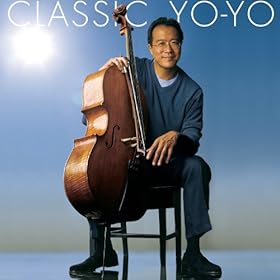
As you came into class this week we were listening to a recording of Simple Gifts by Yo-Yo Ma and Alison Krauss. It is on the Album Classic Yo-Yo. The best price for the whole album is on Amazon.

In class we talked about simple improvisation. If you have been following this blog for any amount of time, or involved in my classes for more than one session, you may notice this is a common topic! Improvisation is important for young children. As parents we have to be ready to improvise with more than just the songs we are singing with our children. Improvising (creating something in the moment) new verses to the familiar songs you are learning in class can help with your day. You can make up verses to songs about cleaning up, going potty, going to sleep, eating food, something you see while you are learning to wait patiently! We improvised with the songs Rocket Ship, Hey Lolly, Lolly, and a little bit with Ran Tin Tinnah this week. Pick your favorite song and see if you can make up a new verse to help you get through your day.
We also sang I've Been Workin' on the Railroad this week and I promised I would add more specific musical terms here for what we did. Your children are playing with huge musical concepts in class (odd meter, mixed meter, form, many tonalities, elongation, diminution, accelerando, ritardando, and many more). Being exposed to these large musical concepts through play at a young age will help them understand them as they get older.
In this song we had 3 main sections A, B, C. We played the egg shakers differently in each section.
A - tapped on the floor.
B - shook back and forth in the air
C - tapped together.
We repeated the B section 3 times. Each time we got faster. The musical term for this is accelerando.
Between sections we did a choo-choo whistle sound. We slurred our voices between the same pitches we use when we clean up. These are also the first pitches you can expect to hear from your infant/young child.
 We also held two notes for a really long time. This would be indicated in music by a fermata.
These are all great musical terms and ideas you can explore with older kids, and discuss with your children as they get older and want to understand more about what they already know how to do!
You can listen to Air and Simple Gifts played at President Obama's Inauguration by clicking the video below.
Maestro John Williams arranged a piece based on Aaron Copeland's arrangement of the old Shaker Tune "Simple Gifts" as "Variations on a Shaker Melody". Yo-Yo Ma performs along with Itzhak Perlman on violin, Gabriela Montero on piano and Anthony McGill on clarinet.
In class we talked about simple improvisation. If you have been following this blog for any amount of time, or involved in my classes for more than one session, you may notice this is a common topic! Improvisation is important for young children. As parents we have to be ready to improvise with more than just the songs we are singing with our children. Improvising (creating something in the moment) new verses to the familiar songs you are learning in class can help with your day. You can make up verses to songs about cleaning up, going potty, going to sleep, eating food, something you see while you are learning to wait patiently! We improvised with the songs Rocket Ship, Hey Lolly, Lolly, and a little bit with Ran Tin Tinnah this week. Pick your favorite song and see if you can make up a new verse to help you get through your day.
We also sang I've Been Workin' on the Railroad this week and I promised I would add more specific musical terms here for what we did. Your children are playing with huge musical concepts in class (odd meter, mixed meter, form, many tonalities, elongation, diminution, accelerando, ritardando, and many more). Being exposed to these large musical concepts through play at a young age will help them understand them as they get older.
In this song we had 3 main sections A, B, C. We played the egg shakers differently in each section.
A - tapped on the floor.
B - shook back and forth in the air
C - tapped together.
We repeated the B section 3 times. Each time we got faster. The musical term for this is accelerando.
Between sections we did a choo-choo whistle sound. We slurred our voices between the same pitches we use when we clean up. These are also the first pitches you can expect to hear from your infant/young child.
 We also held two notes for a really long time. This would be indicated in music by a fermata.
These are all great musical terms and ideas you can explore with older kids, and discuss with your children as they get older and want to understand more about what they already know how to do!
Subscribe to:
Posts (Atom)