Wednesday, April 10, 2013

Odd Lullabies


Phyllis, one of the teachers and co-owners of Music Together of Charlotte, sent the following "Lullaby Challenge" to her families this for the Spring session.  

     I want to issue the Lullaby Challenge (my invention---not a 'real' thing).  The two lullabies on this collection are   
     rare, not found in most typical homes.  BUT, if we don't learn them, then the last song before the Goodbye 
     Song is just going to a clock-watching event, because if the adults aren't singing, then the kids will be a little   
     nutty coming off of the playalong. Adult singing is imperative to bring the energy into focus, calm us all for our 
     last sweet moments together for the week. So, please listen to the lullabies; at least shoot for knowing the 
     melodies so we can 'loo' and 'la'.

     CRADLE SONG is actually a William Blake poem, set to a melody (I've mentioned this in some classes), so 
     that's kind of neat. A tad wordy, but not unapproachable.  The full poem, for the truly ambitious:   

     RAISINS AND ALMONDS is just lovely, and could open a good discussion about why is a white goat going 
     grocery shopping?  A couple of sources, if you're interested- http://en.wikipedia.org/wiki/Raisins_
     and_Almonds
     and from a Q&A blog:  In the Orthodox synagogue, in those old sexist days,the women were not allowed in the main   
     area, but they had a "peanut gallery" up above. There was one ceremony, where the little boys are supposed to have 
     reached a certain point in their religious development (not the Bar Mitzvah--that is when they are no longer little boys.) 
     The women shower the little fellers with small bags of raisins and almonds from above. It is a traditional gift for boys 
     who reached that stage.      So the lullaby is the mother telling her infant son how proud she will be of him someday.

My hope is that this information will help you understand the lullabies in this collection a little better.  They may be a little different than what you are used to, but they are lovely songs to soothe your child.  

Please make sure you sing lullabies to your children in class and especially at home.  Some day's it may take many repetitions, but hearing a loved one sing a lullaby is soothing to every child.  It is a gift they will keep for a lifetime!


Sunday, April 7, 2013

Ten Little Indians?

In the second week of Spring classes we sang Hay Ya Na from the Music Together collection.  I enjoy singing Native American music because you get to use your chest voice.  Using your chest voice instead of your head voice is different than the way we normally sing today.  I feel like I'm forcing louder sounds out when I'm singing with my chest voice.  Have fun with this different style of singing at home and in class!


Our free dance was a fun polka version of the song 10 Little Indians.  I don't have a link to listen to it all for free, but you can buy the mp3 on Amazon for under a dollar if you're interested.

My kids love this version of 10 Little Indians.  The regular version of this song was a standard preschool counting song when I was a kid.  You can use it to teach your kids counting forward 1-10 and backward 10-1.  It's also a great way to work on fine motor skills by showing how many with your fingers.

The word Indian is no longer considered "politically correct."  But as a home school mom I think omitting the term completely does my children a great disservice.  When Columbus sailed to America he thought he was in India.  That is how we got the term Indian instead of Native American.  
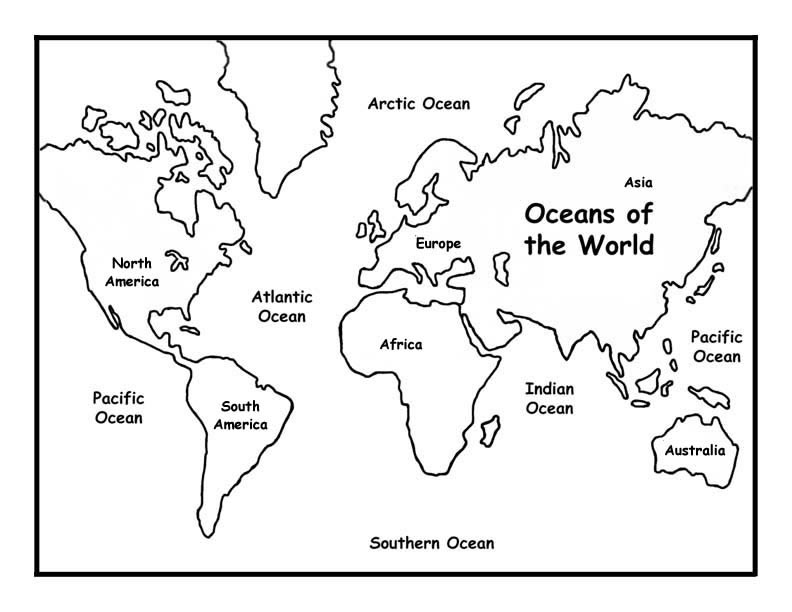
We have a dry erase map at our house and I had my preschooler and kindergartner simply draw a line from Europe to America and then look for India.  They could very easily see that America is in the way if you are trying to get to India.  We discussed why Columbus wanted to get to India, to buy and sell goods, and how his train of thought to go around the world would have been right if America wasn't in the way. 

Correct map of the World

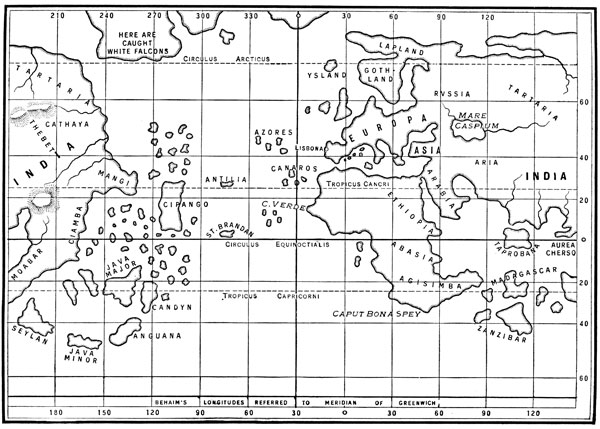
What Columbus thought.


Here is one of the first maps of a round world from 1482.  It was made by Ptolemy long before Columbus thought the world was round.  Click here for more information


Friday, March 22, 2013

This Train

Fun video of "This Train," a great song from the Winter collection!


 We have another spiritual in the Spring session.  These songs are important because they are a part of American history.  "This Train" began as a spiritual and then was adapted to by Woodie Guthrie, and others, to be a folk song as well.

African American spirituals often had code words.  Sometimes in reference to the underground railroad.  To learn more about spirituals and their meanings click here.

Thursday, February 21, 2013

Rest

Most of my days are packed full of activity.  I am sure most of yours are as well.  I plan as much as I can and expect a fair number of curve balls from my three lovely children.  In thinking about how I would describe most days with a piece of music Buggy Ride fits well.  It's fast, non-stop, going from one instrument to another and back again, but enjoyable to listen to!


However, one thing I always try to plan in the day is time for my kids to rest.  Time for the baby to take a nap and the rest of us to snuggle up in my bed to read books and work on schoolwork.  Most parents make sure there is rest time for their young children.  It is a necessary quiet time for the children and the adults.  Think about the days when your child does not take a nap.  You probably didn't get chores, phone calls, emails, or some other adult quiet time activity done.  Most Mom's don't like to think about their little ones not napping.  We need that quiet.

Similarly, we need that quiet in music too!

Often in early childhood music we talk about the sounds and movements the children are producing.  The lesson plan moves quickly (and hopefully efficiently) from one song to the next.  There are songs with more movement and some with less but we are making noise and moving continually.  Sometimes the rests are forgotten.

When I teach preschool children I have begun to have them lay their head on their hand like they are resting during rests in the music.  Saying SHHHH for the rest still puts a noise there, which defeats the purpose.  Shhhh might prepare us for listening, but it is not quiet.

When I sing a tonal pattern or speak a rhythmic pattern to you in class, you need a moment of silence (even if it's a tiny one) to audiate that in your head and prepare to sing or speak it back to me.  If I filled that necessary silence it would impair you brains ability to process what I asked you to copy, consequently making it difficult to repeat back to me.

So I encourage you to think about silence in music this week.

The other day I was frustrated with my kids.  Their needs were continual.  There was no silence in the house.  So I stopped talking.  Not to be mean, I just needed quiet.  What happened next was amazing.  As they played outside together, near me, they would ask questions, then answer them themselves.  They would ask where something was, then go find it themselves!  When I didn't immediately jump up to get it for them or continually interject words between theirs they did things (they were able to do) for themselves!  And after being quiet for awhile my nerves were calmer too!

So I encourage you to think about silence in general this week.

I actually had a hard time finding songs with good silences in them.

In class our play along was Supercalifragilisticexpialidocious which has a part where the music stops and one of the characters continues speaking.  We typically stop playing instruments and listen during that part so that will suffice for a type of silence.


Similarly, when we danced to the song Jump In the Line the music stops (around 2:45) and the beat continues, giving you another type of silence to listen for.


STOMP is a rhythmic group.  If you have never seen them before I encourage you to search for them on YouTube.  They keep complex rhythms going together with fun found objects.  As discussed above, they must have some silences to be able to process what comes next and how to stay together.  Look and listen for the silence in this video.


And lastly, this was a video I stumbled across that is a relaxing reflection on silence.

Sunday, February 3, 2013

Where Did Last Week Go?

Is it next week already?  Wow, that went by fast.  It's also time to start thinking about registering for Spring Music Together classes (early registration starts Feb. 11)!  If you would like to have any say on Summer class schedule or next year please let me know what days and times work best for you.  I am working on scheduling now.

This week in class we working on audiating the melody of She Sells Sea Shells while continuing to keep the rhythm with the finger cymbals.  The ability to audiate, or keep the music and beat in your head, is a major goal your children are working on achieving.  Having the adults audiate in class gives the children a chance to work on that skill, as well as giving the adults some insight into what their little ones brains are doing.  We are going to continue to work on this skill in class!

Our dance last week was Harry Belafonte's "Jump In the Line."  Such a fun song to dance and play instruments to!

ENJOY!

My family loves the Muppets so I can't resist sharing these awesome videos too!

Now do some rhythm patterns!


Try singing an ostinato along with Harry and the Muppets.  An ostinato is a repeated part.  Listen starting around 1:42 while Fozzie talks to Harry, the other characters continue an ostinato behind their conversation. Another great ostinato to use would be singing, "Daylight come and me wanna go home."

Our lullaby this week has steel pan drums in the accompaniment on the recording.  As promised, here are some videos with steel pan music.

Thursday, January 24, 2013

Different Tonalities and Meters


This week in class we sang Pussycat.  I told you that the most important part of this song was to sing it because it had a tonality that our ears are not used to.  Pussycat is in e phrygian.  If you are interested in understanding more about the structure of the phrygian scale I have added some information below.  I encourage you to click the play button under the notated scale, listen, and then try to sing the fifth note of the scale and then the first like we do when we clean the instruments up.  These are the two pitches from any song that will stick out the most to your child.  These will be the pitches you will most likely hear them sing first. 

Modern Phrygian mode


Modern Phrygian modal scale on E About this sound Play.
In modern western music (from the 18th century onward), the Phrygian mode is related to the modern natural minor musical mode, also known as the Aeolian mode: the Phrygian scale differs in its second scale degree, which is a semitone lower than that of the Aeolian.
The following is the Phrygian mode starting on E, or E Phrygian, with corresponding tonal scale degrees illustrating how the modern major mode and natural minor mode can be altered to produce the Phrygian mode:
E Phrygian
Mode:  E  F  G  A  B  C  D  E
Major: 1 2  3 4  5 6  7 1
Minor: 1 2  3  4  5  6  7  1

[edit]


This weeks dance!
Tip toe, kick, wiggle, and jump to French composer Jacques Offenbach's Can-Can.


Play along and dance to Kingdom Dance from the movie Tangled.
Did you notice in class that the meter changes in the middle of the song?  Did it feel like couldn't find the correct beat for a minute during the play along?  Around 1:12 the music changes from triple meter (1,2,3) to duple (1,2,3,4).  See if you can hear and feel the change at home.

Friday, January 18, 2013

Turn you day around with a Waltz and a Lullaby

It can't be said enough how important singing lullabies is.  The sound of your voice is soothing to your child.  (Even if you don't agree).  Singing lullabies to your child before bed helps them relax and fall asleep.  I encourage you to also sing tonal patterns after the lullaby.  Singing tonal patterns after a song gives your child an idea of the tonal structure of that song.  Give it a try the same way we do in class.  It may be simply singing the fifth and first notes of the key the song is in like we do in class.  Don't over think it if that doesn't make sense, just try it.

Below is a link to the New York Philharmonic playing Arirang in Korea.  Arirang is a traditional Korean folk song.  We have sung it as our lullaby in class for the past two weeks.  It is a beautiful song.  It also introduces your child to lovely Asian tonalities.
Play the video while your child is playing something else in the room.  They will enjoy listening even if they are not actively involved in watching the orchestra play.
If they are watching, point out what instruments you see in the orchestra while you listen.  Try conducting like the conductor.  Pretend you are playing the harp, violin, flute and other instruments you identify.


For our dance this week we waltzed!  I love waltzing with my children in my arms.  My favorite memories of when my oldest daughter was a baby was waltzing around her room with her and seeing her smile, laugh, and enjoy the movement of the music together.  She still loves it when I pick her up and waltz, but we also enjoy holding hands to dance through the kitchen together.  If you hit that 5:00 fussy hour and don't know what to do, try waltzing!
Here is the waltz from this week for some inspiration.